Manufacturing plastic bottles is a highly efficient, multi-step engineering process. The vast majority of plastic bottles—especially those used for water, soda, and household cleaners—are made from Polyethylene Terephthalate (PET) using a process called Stretch Blow Molding.
Here is a step-by-step breakdown of how a raw plastic resin becomes a finished bottle:
1. Plastic Preparation & Melting
The process begins with raw plastic resin in the form of small, pellet-sized beads.
Drying: PET plastic absorbs moisture from the air, which can compromise the bottle’s structural integrity. The pellets are first thoroughly dried in large hoppers.
Melting: The dried pellets are fed into an injection molding machine, where they are heated until they turn into a thick, molten liquid.
2. Creating the “Preform” (Injection Molding)
Before a bottle becomes a bottle, it starts as a preform (sometimes called a parison).
The molten plastic is injected into a high-pressure mold to create a shape that looks exactly like a rugged, miniature test tube.
Crucial Detail: The threaded neck (where the cap screws on) is molded to its final, exact size during this step. It will not change shape during the rest of the process.
These preforms are quickly cooled and can either be stored/shipped or sent directly to the blowing stage.
3. Reheating the Preform
If the preforms were cooled and stored, they must be prepped for stretching. They are loaded into a stretch blow molding machine and passed through a series of infrared heaters. This softens the plastic body of the preform, making it elastic and ready to be shaped, while leaving the threaded neck cool and rigid.
4. Stretch Blow Molding (The Final Shape)
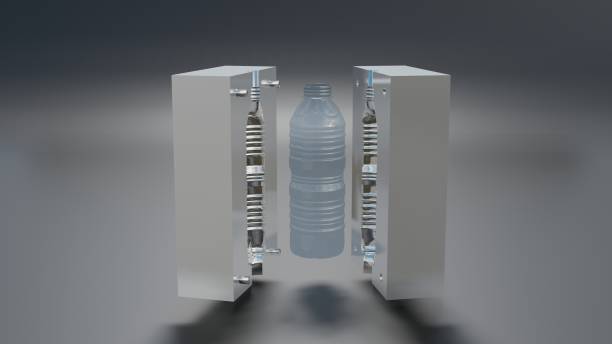
This is where the magic happens. The softened preform is placed inside a two-part metallic mold that is clamped shut around it.
[Preform Inserted] ---> [Stretch Rod Pushes Down] ---> [High-Pressure Air Blows]
Stretching: A mechanical stretch rod is inserted down through the neck of the preform. It pushes downward, physically stretching the hot plastic vertically.
Blowing: Simultaneously, a massive blast of high-pressure compressed air (around 40 bar) is shot into the preform. This forces the expanding, pliable plastic outward in all directions until it snaps flat against the cold walls of the mold cavity.
Cooling: Because the metal mold is cooled by circulating water, the hot plastic solidifies instantly upon contact, freezing into its final bottle shape.
5. Ejection and Quality Control
The mold splits open, and the fully formed plastic bottle is ejected onto a conveyor belt.
From here, the bottles undergo automated inspections to check for consistent wall thickness, defects, or leaks. Any excess plastic trim (usually minimal in stretch blow molding) is removed and instantly recycled back into raw pellets. Finally, the bottles are rinsed, air-dried, boxed, and shipped off to bottling plants to be filled, labeled, and capped!